
Where AI vision is used in Jordan today — factory inspection, counting, retail analytics, security, and ANPR — and how to start with a local computer vision team.
What “AI vision” means in practice
AI vision — also called computer vision or video analytics — is software that understands what a camera sees. A model trained on example images decides whether a label is straight, how many cartons crossed a dock door, or whether a person entered a restricted zone, and sends that decision to a dashboard, an alarm, or a machine. The camera is the eye; the model is the judgement; the output is something a business can act on.
What changed in the last few years is not the cameras but the models: deep learning handles the natural variation of real products and real scenes, and small edge computers can now run those models beside the camera instead of in a distant data centre.
Where Jordanian companies use it today
Jordan's economy has a strong base in food and beverage, pharmaceuticals, chemicals, and logistics, plus a large retail and hospitality sector. The use cases that pay back first map directly onto those industries:
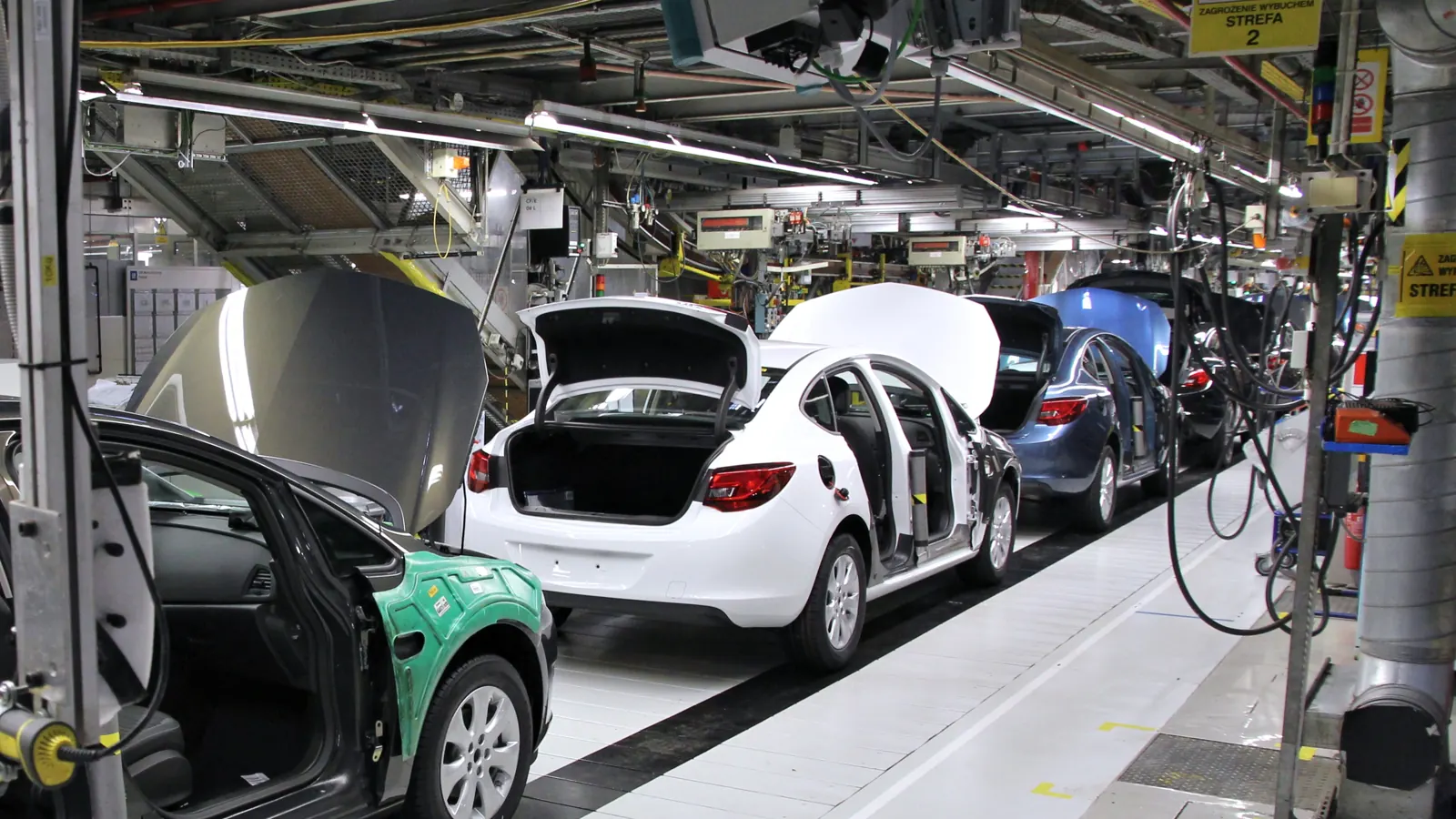
- Production-line quality checks: label misalignment, missing caps, fill level, packaging, and date codes — see Assembly line QA.
- Loading-bay counting: net counts of packs and pallets per truck with an auditable ledger — see Pack counting.
- Security on existing CCTV: intrusion, loitering, restricted areas, and PPE checks, with alerts and clips instead of hours of footage.
- Retail and hospitality: anonymous queue monitoring on IFA, and returning-customer recognition at the POS for cafes and retail (DCI).
- Gates and parking: number plate recognition for Jordanian, Saudi, and Emirati plates in Arabic and Latin characters.
Why a local computer vision team matters
Global vision platforms are strong on English documentation and standard parts. Projects in Jordan tend to fail on the details around them: Arabic print on labels and date codes, Arabic plates, dashboards your supervisors can read, someone who can be on the factory floor the same week, and a clear answer to where video is stored. A team in Amman can test on your actual line, in your actual lighting, before you commit.
How to start without a big budget
Pick one problem with a visible cost — a recurring customer complaint, a count that never matches, a zone that keeps being breached. Check whether a camera can see it (our free feasibility check gives a first read in under a minute), then run a short pilot on one line or one site with success criteria agreed up front. Scale only what the pilot proves.
Related on simatlabs.com
Have a problem a camera could solve?
Describe it, add a photo, and get a free first read on whether AI vision can handle it.